



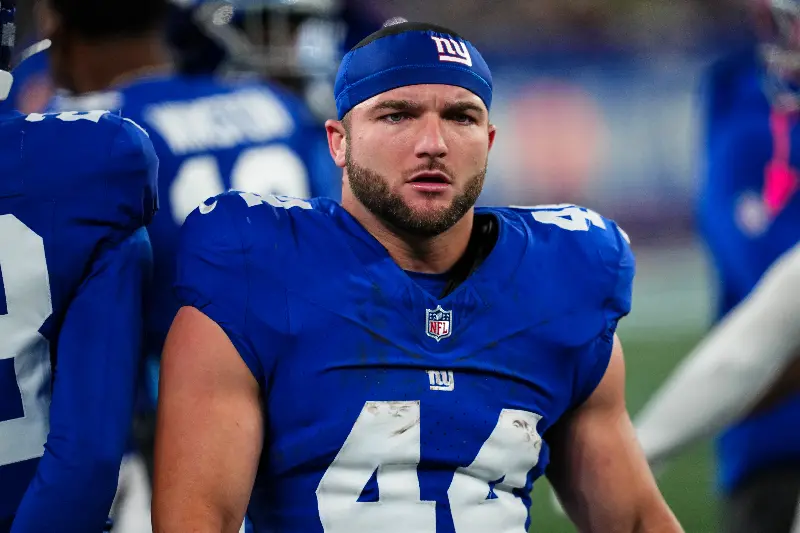
The fallout from Cam Skattebo’s viral podcast comments is escalating.
Just days after the New York Giants running back dismissed chronic traumatic encephalopathy (CTE) as “an excuse” and called asthma “fake,” the league-wide backlash has taken a more serious turn.
What started as outrage has now shifted into something deeper and far more personal.
Enter former six-time Pro Bowl defensive tackle, Gerald McCoy.
Speaking publicly this week, McCoy called out Skattebo, referencing two former teammates who have had to deal with the negative consequences of CTE.
“I have teammates that passed away,” McCoy said, referencing former NFL players Vincent Jackson and Doug Martin. “Anybody who knows Doug knows that wasn’t Doug … Let’s be careful on the things we are saying because you never know who it affects.”
Skattebo’s original comments came during an appearance on the “Bring The Juice” podcast earlier this month, where he questioned whether CTE, a degenerative brain disease linked to repeated head trauma, was even real, calling it an “excuse.”
He doubled down by dismissing asthma entirely, telling listeners to “just breathe air.”
The reaction was immediate and intense, and for good reason.
CTE became one of the defining health crises tied to football.
Studies have shown an overwhelming percentage of examined former NFL players have signs of the disease, which is linked to memory loss, depression, behavioral changes, and, in some cases, premature death.
McCoy’s reference to Jackson underscores that reality.
The former Pro Bowl wide receiver was posthumously diagnosed with CTE, a discovery that added to growing evidence about the long-term neurological toll of the sport.
Meanwhile, his mention of Martin, while more nuanced, highlights how dramatically players can change due to unseen mental and neurological struggles.
In 2025, Martin died at age 36 after becoming unresponsive while in police custody during a mental health crisis, following a reported break-in incident.
His family later revealed he had been battling serious mental health challenges, and his brain was set to be examined for possible CTE.
There’s a difference between locker room humor and public messaging, and that line is razor-thin in modern sports media.
Skattebo later walked back his remarks, calling them a “tasteless joke” and apologizing publicly.
But the damage was already done.
In a league still grappling with its relationship to head trauma, comments like these challenge years of progress around awareness, safety, and accountability.
For younger players, especially those early in their careers like Skattebo, the expectation is evolving.
It’s not just about performance anymore. It’s about understanding the platform and the responsibility that comes with it.